
Discover India’s coffee revolution-from street vendors to premium outlets. Learn how coffee culture is transforming Indian cities and becoming a lifestyle statement for millennials. Traditionally, India has been the nation of tea-or chai, as it’s lovingly called. But over the past two decades, something remarkable has been brewing beneath the surface. India’s relationship with coffee has undergone a dramatic transformation, evolving from traditional street-side vendors serving strong filter coffee to sleek, sophisticated coffee outlets dotting city streets.
If you’ve noticed more coffee shops opening up in your neighborhood lately, you’re not imagining it. This isn’t just a passing trend. It’s a full-scale coffee revolution that’s reshaping how millions of Indians consume, think about, and experience their daily caffeine fix.
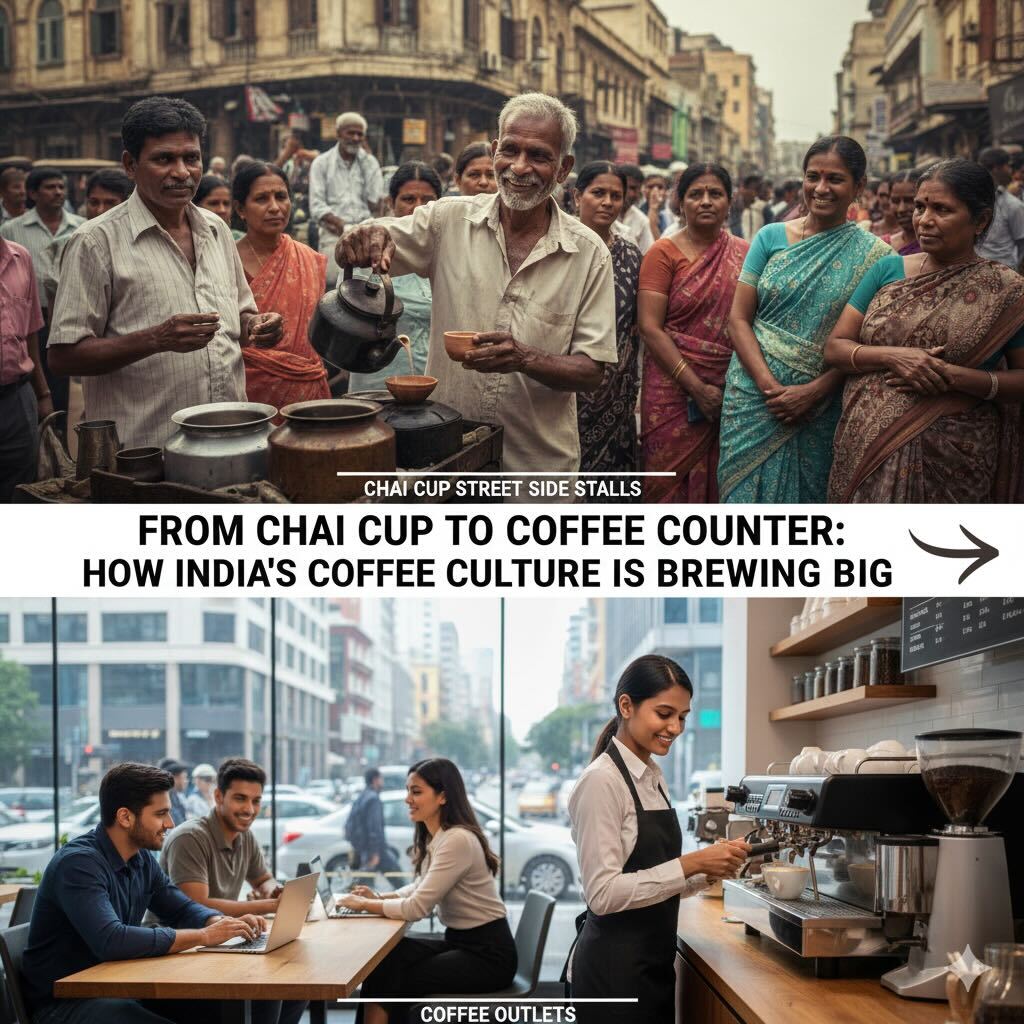
The Old Way: Street Vendors and Filter Coffee Tradition
For centuries, coffee in India remained a deeply regional phenomenon. While South India cherished its traditional filter coffee—the iconic kaapi—prepared with a unique metal filter and served with piping hot milk, the rest of India remained loyal to chai. Street vendors selling coffee from humble pushcarts were a common sight in cities like Bangalore, Chennai, and Hyderabad, but coffee remained largely confined to these southern pockets.
The brewing method was ritualistic and deliberate. Coffee powder was mixed with jaggery or sugar, hot water was poured through a metal filter, and the result was a strong, aromatic brew that sparked conversations and connected communities. These street vendors weren’t just selling coffee; they were serving as social anchors in their neighborhoods.
The Turning Point: Urbanization and Global Influences
Everything changed in the 1990s when India opened its doors to globalization. As cities expanded and young professionals moved into metros, their lifestyles shifted too. The rise of international brands, coupled with increasing disposable income among India’s growing middle class, created the perfect environment for coffee culture to flourish.
Café Coffee Day, launched in 1999, was among the first homegrown chains to recognize this opportunity. It quickly became a beloved destination for students and young professionals seeking a space to study, work, or simply hang out. By its peak, the chain had expanded to over 1,700 outlets across the country. While the brand faced challenges later, it had already planted the seeds of a coffee revolution.
The arrival of international giant Starbucks in 2012 further accelerated the trend. Soon, local brands like Blue Tokai Roasters, Third Wave Coffee, and Subko Coffee emerged, each bringing their own unique take on specialty coffee. These weren’t just places to grab a quick caffeine fix—they were lifestyle destinations.
Today’s Coffee Scene: Outlets, Chains, and Experiences
Fast forward to 2025, and the numbers tell an extraordinary story. India’s branded coffee shop market has grown to 5,339 outlets, adding over 600 new stores in just the last 12 months alone, representing a 12.7% growth rate.
The market leaders speak volumes about how diverse this landscape has become:
- Tata Starbucks leads with 480 stores
- Barista operates 465 outlets
- Café Coffee Day maintains 425 locations
- Third Wave Coffee and Café Buddy’s Espresso are the fastest-growing homegrown brands, each adding 56 stores recently
But the real surprise? Coffee culture is no longer limited to metro cities like Delhi, Mumbai, and Bangalore. Tier-II and Tier-III cities—towns like Jalandhar, Varanasi, Amritsar, and Mussoorie—are experiencing their own coffee booms.
Why the Coffee Revolution Matters
Several factors are driving this seismic shift in Indian coffee consumption:
Changing Lifestyles and Remote Work: The pandemic accelerated the demand for alternative work spaces. Coffee shops have become the new “third space”-neither home nor office, but somewhere in between where people can work, meet friends, or simply unwind.
The Youth Factor: Over 50% of India’s population is under 30, and this younger generation sees coffee as more than just a beverage. It’s a lifestyle statement, a symbol of aspiration, and a social experience.
Social Media Influence: Instagram and social media play a massive role. Young consumers want quality coffee, yes, but they also want stylish, photogenic spaces they can showcase online. Coffee outlets have become destinations, not just transactions.
Premium and Specialty Coffee Trends: There’s a growing appreciation for single-origin beans, specialty brewing techniques like pour-overs and AeroPresses, and artisanal roasting. Subscription-based coffee orders have increased by 50% in just one year, signaling deeper consumer engagement.
The Numbers Behind the Boom
The Indian coffee shop market was valued at USD 380.8 million in 2024 and is projected to reach USD 1,016 million by 2033, growing at an impressive 11.50% annually. To put this in perspective, India’s coffee market is growing at 10.15% year-on-year-roughly three to four times faster than the global average of 2.5-3%.
It’s worth noting that India ranks as the sixth-largest coffee producer globally, yet most of this production was historically exported. Now, with the rise of specialty coffee and direct-trade models, Indian-grown coffee is finally getting the recognition it deserves at home.
From Vendor to Cafe: What Changed?
The transformation from street vendors to modern outlets represents more than just a business evolution. It reflects deeper changes in Indian society:
Accessibility: What was once limited to South India or premium settings is now available everywhere, from small towns to metropolises.
Community Spaces: Coffee shops have become community hubs where people gather to work, create, socialize, and express themselves. As one café founder put it, “Cafés have naturally become the new living rooms of urban life where creativity meets comfort.”
Quality and Craft: There’s a cultural shift toward appreciating the craft behind every cup. Roasting techniques, bean sourcing, and brewing methods matter to consumers now in ways they never did before.
Inclusivity: Coffee is no longer a luxury or a regional preference. It’s becoming as normal as chai for many Indians, especially the younger generation.
What’s Next for India’s Coffee Culture?
The trajectory is clear: India’s coffee scene will continue to expand. The World Coffee Portal forecasts that the Indian branded coffee shop market will surpass 6,110 outlets by 2026 and exceed 10,000 outlets by 2030, representing a 13.2% CAGR over five years.
What’s particularly exciting is the role of homegrown brands. Companies like Third Wave Coffee and Blue Tokai are proving that Indian entrepreneurs can compete with international chains while staying true to quality and innovation. The rise of coffee culture in smaller cities suggests that India’s coffee revolution is far from over—it’s just getting started.
The Bottom Line
India’s coffee story has evolved dramatically from a regional beverage enjoyed by street-side vendors to a national phenomenon reshaping urban lifestyles and experiences. Whether it’s a quick espresso at a modern café, a carefully curated pour-over at a specialty roastery, or a nostalgic filter coffee at a traditional outlet, coffee has become woven into the fabric of contemporary Indian life.
The street vendors who once served strong filter coffee remain an important part of India’s coffee heritage. But now, they’re part of a much larger, more diverse ecosystem where coffee culture thrives in every form-from humble pushcart to gleaming café chains.
For the coffee lover in India, it’s never been a better time to explore, experiment, and celebrate this vibrant, rapidly evolving culture.
Follow our blogs https://thecoffeeshifu.com/blog/
How to Make the Perfect Orange Tonic Espresso – A Signature Coffee Shifu Creation
Discover The Coffee Shifu’s exclusive Orange Tonic Espresso recipe – a refreshing blend of citrus,…
Gulab Jamun Affagato- The Hot Viral Winter Recipe
Gulab Jamun Affogato is a dreamy fusion of Italian coffee culture and classic Indian mithai,…
Grape Tonic Espresso The New Viral?
Grape Tonic Espresso is a fizzy, fruity, layered iced coffee that combines grape juice, tonic…
Gajar Ka Halwa Affogato: The Coffee Shifu’s Exclusive Fusion Recipe
Gajar Ka Halwa Affogato fuses traditional Indian carrot halwa with classic Italian affogato, where hot…
Best Cappuccino Recipe at Home: Instant Coffee to Frothy Perfection
Homemade cappuccino delivers thick, creamy foam and rich espresso flavor using just basic kitchen tools-No tools-no…
Best Homemade Mocha Hot Chocolate (Better Than Starbucks Café Mocha)
Craving the perfect blend of rich chocolate and bold coffee? Mocha hot chocolate delivers exactly that-a luxurious,…